




For Canadian small and medium-sized enterprises (SMEs), losing a key employee can lead to a significant increase in costs, factoring in recruitment, training, and lost productivity.
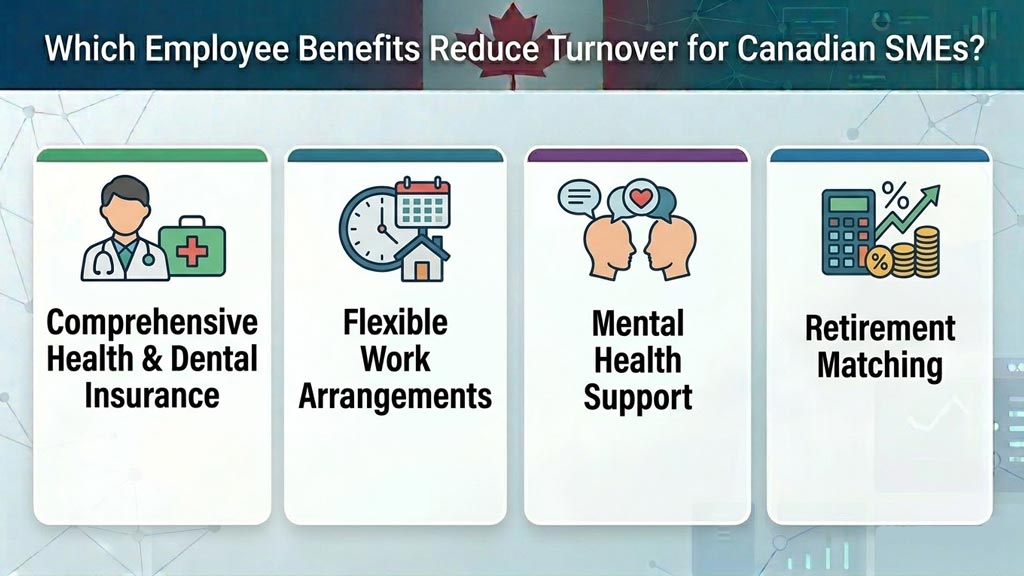
While every business is unique, specific benefit categories have proven to be the most effective tools for reducing voluntary turnover. These include extended healthcare benefits, mental health support, retirement savings matching, and flexible work arrangements.
Read on to understand how these benefits drive retention and how to build a sustainable, cost-effective plan that fits a small-business budget.
Extended Health Care Benefits: The Foundation of Retention
Extended health care coverage that fills the gaps left by provincial plans is one of the most valued benefits a small Canadian employer can offer. This coverage is typically provided through two main vehicles: Group Insurance Plan and Health Spending Accounts (HSA). Each option offers a different approach to employee wellness:
- Group Insurance Plans: Traditional plans from insurers that pool employees to offer coverage for drugs, dental, vision, and more.
- Health Spending Accounts (HSA): The employer allocates a fixed dollar amount per employee each year, which the employee can use to reimburse a wide range of eligible medical and dental expenses under CRA PHSP rules.
The link to retention is direct. As health and wellness programs are consistently one of the top priorities for workers, protecting them from unforeseen or out-of-pocket healthcare expenses creates a powerful financial incentive to stay that a higher salary elsewhere often cannot match.
Mental Health Support: Investing in Resilience
Addressing mental health in the workplace is critical. According to a report by Mental Health Research Canada, burnout costs employers $5,500 to $28,500 per employee annually due to absenteeism, presenteeism (working while unwell), and turnover. Especially for an SME, even one employee struggling with burnout or anxiety can impact the entire team.
The good news is that investing in mental health has a proven financial return. One study reported that for every dollar a company invests in workplace mental health programs for 3+ years, it can see a return of up to $2.18 through improved productivity and retention.
There are two primary ways SMEs can provide this support:
- Employee Assistance Programs (EAP): Many EAPs offer confidential, short-term counselling for employees and their families and may include add-ons like financial or legal support. They are highly affordable.
- Psychological Services Coverage: This is typically included in an extended health plan or HSA and provides a dollar amount for employees to seek therapy from a registered psychologist, social worker, or counsellor.
The opportunity for SMEs is significant. While many Canadian employees are concerned about psychological safety at work, a large gap remains between the need for mental health support and its availability. Offering an EAP or counselling coverage immediately sets a business apart as an employer that cares for its team’s holistic well-being.
Retirement Savings Matching: Building Long-Term Loyalty
Implementing retirement plans, especially with employer matching, can dramatically reduce turnover by fostering a long-term stake in the company. The most effective retirement savings matching strategy for Canadian SMEs is combining a Group Registered Retirement Savings Plan (Group RRSP) and a Deferred Profit Sharing Plan (DPSP).
In this arrangement, employees save through their payroll into an RRSP for an immediate tax break, while the employer puts matching dollars into a DPSP. This is a win-win situation: employees do not pay upfront tax on the extra money, and employers gain a vesting advantage which supports retention.
Because the CRA rules for registered DPSPs require that plan allocations vest no later than two years, leaving before this period ends could mean walking away from thousands of dollars in employer contributions. It not only offsets the cost of turnover but also demonstrates a deep commitment to the employee’s future.
Flexibility and Paid Time Off: A Low-Cost Investment
Beyond health and retirement, how an employer structures time and place of work significantly boosts employee retention by reducing burnout and enhancing work-life balance.
Below is how Canadian SMEs can leverage generous time off and flexible work as low-cost, high-impact tools to retain top talent:
Enhanced Paid Time Off (PTO)
Canadian employment standards mandate a baseline of vacation time and statutory holidays, and rules vary by jurisdiction. For example, B.C. provides up to 5 sick days per year, while Quebec provides 2. Simply meeting these legal minimums will not help your business stand out.
By offering even one additional week of paid vacation beyond the statutory requirement and voluntarily offering more paid sick days above your local statutory minimum, you strongly signal an investment in your team’s well-being. It is a highly attractive perk that sets you apart at a relatively low direct cost to the business.
Flexible and Remote Work Arrangements
Flexible work is no longer a temporary measure but a permanent feature of the Canadian labour market. As of late 2025, a survey by Robert Half found that 28% of new postings were hybrid and 11% were fully remote (about 39% combined). The same research also shows that flexibility is essential for employees: 56% rank hybrid as their top choice for a work model, and 38% of those not looking for a new job say they do not want to lose their current flexibility.
For SMEs, this is a strategic advantage. While larger corporations may mandate a return to the office, small businesses can leverage flexibility to attract and retain top talent who value autonomy and work-life balance.
How to Build a Retention-Focused Benefits Plan
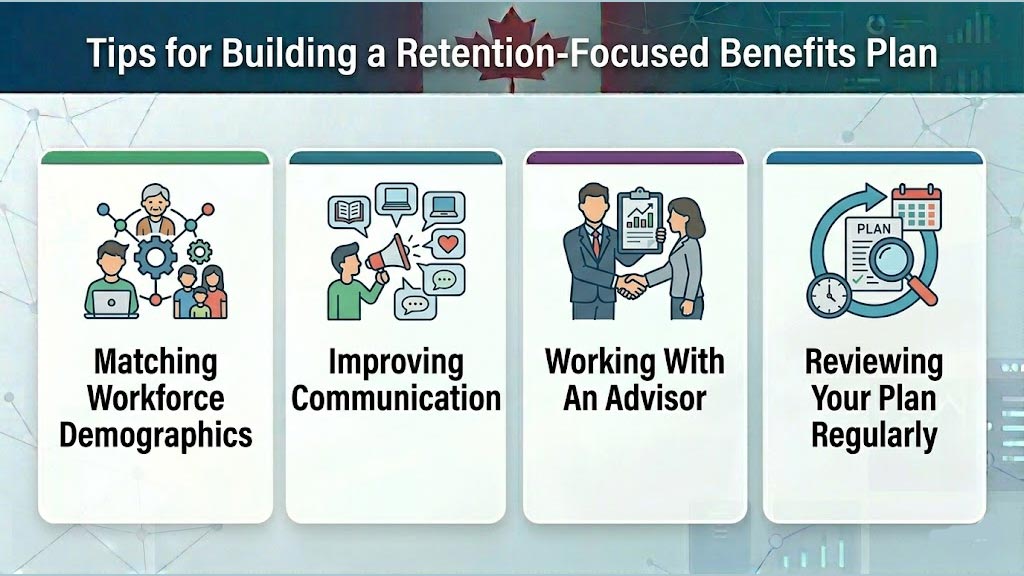
Knowing which benefits exist is only half the challenge. Matching your workforce demographics, improving communication, working with an advisor, and reviewing your plan regularly are the key strategies for building a plan that fits both your budget and your team’s needs.
Survey Your Team
Do not guess what your employees value. A simple, anonymous survey asking them to rank the importance of health, dental, retirement, and flexibility will provide invaluable data to guide your investment.
Partner with an Advisor
A benefits advisor specializing in small businesses is an essential partner. They will help you navigate the market, design a plan, and compare carriers to find the best fit for your budget and team.
If you are a first-time entrepreneur, learn about methods to budget for employee benefits here!
Communicate the Value
A benefit that is not understood has no retention value. Provide employees with a clear, one-page summary of their benefits. Explain what’s covered, how to make a claim, and who to contact with questions.
Review Annually
Benefits are not “set and forget.” Review your plan 90 days before renewal each year. Look at utilization data, employee feedback, and market trends to ensure your plan remains competitive, cost-effective, and aligned with your team’s needs.
Before designing a plan, it is also essential to understand why employees leave in the first place to target the right issues.
